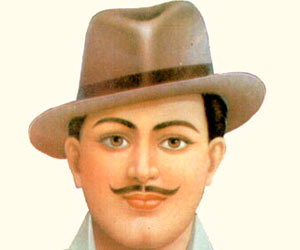
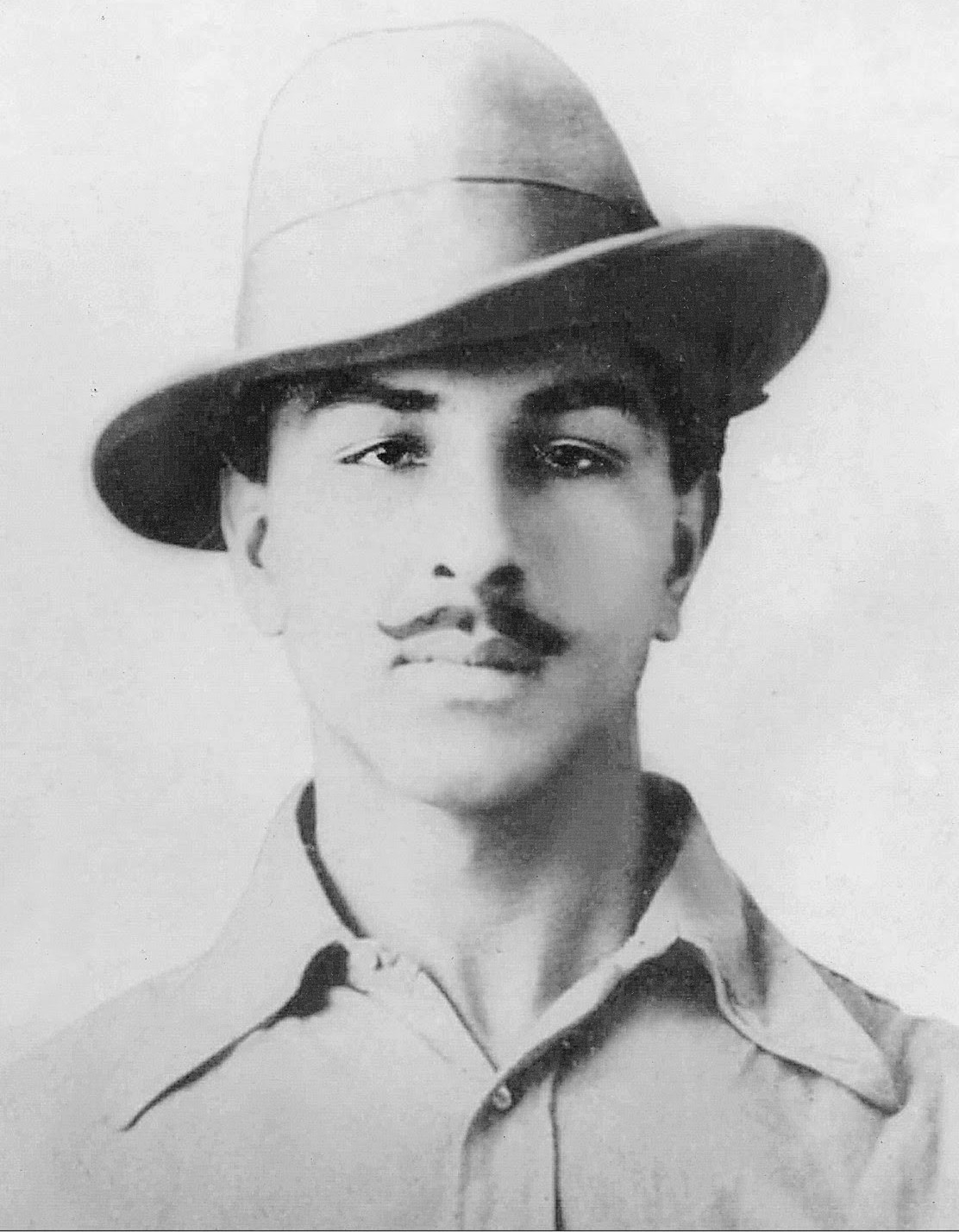
Ram Prasad Bismil Autobiography - Get, Read and Change Your Life

>> Friday, December 17, 2010

(19-12-2010 )Today is martyrdom day of Amar Shaheed Krantikari Ram parsad bismil. If you read the Autobiography of Ram Prasad Bismil, you can estimate that Indian traitors ( traitor ) have big role for the death of each of freedom fighter of India and same is happening these days.  That is the reason Ram Parsad Bismil had to write in his autobiography :

जिन्हें हम हार समझे थे गला अपना सजाने को, 

वही अब नाग बन बैठे हैं हमारे काट खाने को |

But after cheating of friends , he was captured by English govt. It was done due to information of traitor and English govt. had hung him till death on 19th Dec. 2010 and on 18th Dec. 2010, his friend Ashfak Ulah Khan was hung. But both cried "We wish the downfall of the British Empire."

If you want to get Ram Prasad Bismil Autobiography and change your life style according to this great freedom fighter, then contact me at here.
Continue reading »

Tribute to Sardar Vallabhbhai Patel

>> Monday, December 13, 2010


A small lecture on sardar vallabhbhai patel's life is given by me.
Continue reading »

Tribute to Valabh Bhai Patel on His Death which is Coming on Date 15th Dec.

>> Friday, December 10, 2010

Valabh Bhai Patel   expired on 15th Dec. 1950. After crossing 61 years of his death, that "Iron man"  lives in every Bhartiya who are ready to do anything for country Bharat. A documentary Hindi Film was also made   for tributing that great soldier who served bharat upto his death. In this movie paresh Rawal acted as Valabh Bhai Patel.  I bought this film and watched many times. Many things are interesting and many things, you can learn from this video which shows the great personality of Valabh Bhai Patel.

Sardar Valabh Bhai Patel was the big follower of Mahatma Gandhi.

His Main Works in His Life

1. # began a village-to-village tour in the Kheda district for refusing the payment of taxes. After a protracted struggle, the government withdrew the tax.


will continue in next day.
Continue reading »

Hari Om Pawar

>> Tuesday, August 24, 2010

Hari Om Pawar is the famous poet who writes and speaks patriotic poems. He is also known as Veer Ras Kavi. He was born in village of butna of Sikndrabad in Uter pardesh. He is also the professor of Law in Maradh university. He got the award from Rashtrapati and Uprashtrapati and different ministers of bharat.

He has magic in his voice. Mata sarswati is on his tongue. I listen his almost all audio CDs relating to his patriotic songs and poets. If you want to buy and distribute it to your friends and relative, you can buy from directly of Hari Om Pawar at  here.
Continue reading »

What can You Do in Month of August for Bharat

>> Sunday, August 1, 2010

Month of august is so important for every bhartiya because this month bharat became independent and also many freedom fighter martyred in this month. So, Collect your village and city's all friends, relatives and people and tribute following freedom fighters and remember their martyrdom for bharat. Jai Hind.

1st August 2010 martyrdom day of Bal gangadar tilk

11 August 2010 - Martyrdom day of Khudiram Bose

15 August 2010 - Independence Day

17 August 2010 - Martyrdom day of Madan Lal Dingra

18 August 2010 - Martyrdom day of Subash Chander Boss


" Remember, Don't forget above days."  
Continue reading »

How can a Freedom Fighter live his life without Marriage

>> Tuesday, July 27, 2010

One of reader of this blog has sent me email and wants to get guidance from me about how he can live his life as a freedom fighter without marriage.

I think marriage is not a problem if you do voluntary service of great Bharat. Because large number of ladies like Jasi Ki Rani, Gandhi's wife and many others also participated in the fight with British before independence. So, do marriage and you participate with your wife for protecting India.  

But if you decide not to do marriage, you have to strict on your life style because to become freedom fighter and protect India is not easy. For protecting India from external and internal enemies, you have to become Strong physically and mentally and follow the time table.

1. Get up in the morning 4:00 A.M.

2. Fresh 4:00 A.M. to 4:30 A.M.

3. Exercise and Yoga 4:30 A.M. to 5:30 A.M.

4. Bathing 5:30 A.M. to 6:00 A.M.

5. Pray of God 6:00 A.M. to 6:30 A.M.

6. Spiritual and Freedom fighter's book study 6:30 A.M. to 7:00 A.M.

7. Breakfast 7:00 A.M. to 7:30 A.M.

8. Reading of  news, blog and websites 7:30 A.M. to 8:30 A.M.


9. Making of today work planning 8:30 A.M. to 9:00 A.M.

10. Email to other freedom fighters of Bharat 9:00 A.M. to 9:30 A.M.

11. Start Practical Work 9:30 A.M. to 1:00 P.M.

12. Lunch 1:00 P.M. to 2:00 P.M.

13. Start Work 2 : 00 P.M. to 6:00 P.M.

14. Evening Walking, cycling, exercises and bathing 6:00 P.M. to 7:00 P.M.

15. Research Work 7:00 P.M. to 8:00 P.M.

16. Feed Back of Today work 8:00 P.M. to 9:00 P.M.

17. Determination for Future 9:00 P.M. to 9:30 P.M.

18. Pray of God 9:30 P.M. to 10:00 P.M.

19. Sleeping 10:00 P.M. to 4:00 P.M.

Examples of Practical Works

1. Be freedom fighter

2. Practical social work by teaching free to poor and needy students.

3. Water to plants and free plantation services

4. Free services for cows, birds and other animals

5. Free services to parents

6. Free services to patients by blood donation, eye donation and whole body.

7. Free lecture for freedom fighter's stories.

8. Seminars and conference with other freedom fighters.

9. Writing of blog on Protect bharat

10. Discussion every time about the development of Bharat.

11. Learning bharat's all states language.

12. Washing your own clothes.

13. Cleaning your home and your near environment

14. Donation to those who are protecting Bharat.
Continue reading »

Biography of Udham Singh ( Great Freedom Fighter from Punjab )

>> Sunday, July 25, 2010

Udham Singh, great freedom fighter from punjab, was born Sher Singh, on 26 December 1899, at Sunam, in the princely state of Patiala. His father, Tahal Singh, was at that time working as a watchman on a railway crossing in the neighbouring village of Upall . Sher Singh lost his parents before he was seven years and was admitted along with his brother Mukta Singh to the Central Khalsa Orphanage at Amritsar on 24 October 1907.

As both brothers were administered the Sikh initiatory rites at the Orphanage, they received new names, Sher Singh becoming Udham Singh and Mukta Singh became Sadhu Singh. In 1917, Udham Singh's brother also died, leaving him alone in the world. He received education and crafts training.

Udham Singh left the Orphanage after passing the matriculation examination in 1918.He set up a painters shop with the signboard of Ram Mahammad Singh Azad.

He was present in the Jallianvala Bag on the fateful Baisakhi day, 13 April 1919, when a peaceful assembly of people was fired upon by General Reginald Edward Harry Dyer, killing over one thousand people. The event which Udham Singh used to recall with anger and sorrow, turned him to the path of revolution. On this day, General Dyer changed the course of Sardar Udham Singh life.

He resolved to wreck vengeance on the perpetrators of this heinous crime, General Dyer, Sir Michael O'Dwyer the Lieutenant Governor, Punjab and Lord Zetland Secretary of State of India. Sardar Udham Singh moved from one country to another country to shoot the murderers of his countrymen..

He felt thrilled to learn about the militant activities of the Babar Akalis, in the early 1920's, and secretly kept with him, some revolvers and was arrested by the police in Amritsar, and sentenced to four years imprisonment under the Arms Act.

On release in 1931, he returned to his native Sunam, but harassed by the local police, he once again returned to Amritsar and opened a shop as a signboard painter, assuming the name of Ram Muhammad Singh Azad. This name, which he was to use later in England , was adopted to emphasize the unity of all the religious communities in India in their struggle for political freedom..

He reached London through Germany where he joined a training course to hoodwink his activities to trace General Dyer, Sir Michael O' Dwyer and Lord Zetland. It took him twenty years to meet Sir Michael O'Dwyer and Lord Zetland. The third culprit General Dyer had already expired. After 21 years, it was on the 13th March. 1940 when Sir Michael O' Dwyer and Lord Zetland had come to attend a meeting in the Caxton Hall in London, that Sardar Udham Singh entered there with his revolver hidden inside a book. Sardar Udham Singh gunned Sir Michael O'Dwyer down with his revolver. There was great panic and pandemonium in the Hall. He in fact made no attempt to escape and continued saying that he had done his duty by his country. Sardar Udham Singh stood firm and he was chained.

On 1 April 1940, Udham Singh was formally charged with the murder of Sir Michael O'Dwyer. When produced before the Magistrate, he said 'I did the deed because Sir Michael O'Dwyer wanted to cresh all our aspirations for freedom. I had been after him for full 21 years. I am happy that I have fulfilled my job. I am not afraid of death'.

On 4 June 1940, he was committed to trial, at the Central Criminal Court, Old Bailey, before Justice Atkinson, who sentenced him to death. An appeal was filed on his behalf which was dismissed on 15 July 1940. On 31 July 1940, Udham Singh was hanged in Pentonville Prison in London .

Udham Singh was essentially a man of action and save his statement before the judge at his trial, there was no writing from his pen available to historians. Recently, letters written by him to Shiv Singh Jauhal during his days in prison after the shooting of Sir Michael O'Dwyer have been discovered and published. These letters show him as a man of great courage, with a sense of humour. He called himself a 'guest of His Majesty King George', and he looked upon death as a bride he was going to wed. By remaining cheerful to the last and going joyfully to the gallows, he followed the example of Bhagat Singh who had been his beau ideal. During the trial, Udham Singh had made a request that his ashes be sent back to his country, but this was not allowed. In 1975, however, the Government of India, at the instance of the Punjab Government, finally succeeded in bringing his ashes home. Lakhs of people gathered on the occasion to pay homage to his memory.

Want to Buy the Full Biography Book

Buy at here 

Continue reading »

Happy Birthday of Chander Shakher Ajad

>> Thursday, July 22, 2010

Today is 23rd July and this day a great freedom fighter Chander Shakher Ajad was born in India. Today, we tribute this freedom fighter by promising that we will not become slave. Like Chander Shakher Ajad, we will die for protection of India. Physical body of Chander Shakher Ajad is not existed within but his soul is always seeing our good and bad works. So, never do any bad and shameful as an Indian against India. Leave your earning, if you earn by selling India.

We should try to listen the voice of Chander Shakher Ajad. He is telling us, " Dear Indians, be strong like me to fight against the corruption, globalisation and privatisation. All these things are risky for India's independence. Be Indian and Buy Indian."
Continue reading »

चंदेर्शेखेर आजाद आप फिर भारत में जनम लो

>> Tuesday, July 20, 2010

आज के इस युग में हमें चंदेर्शेखेर आजाद फिर चाहिए क्योकिं

१. आज सिर्फ बातों से ही नहीं देश को बचाया जा सकता | कारगिल जसे कांड हो जाते है हम फिर भी शांत रहते है
२. आज भारत में फिर साहसी लोगो की कमी हो गए है जो कह सके या मरेगे या मारेगे |
३. मतलब परस्ती के इस युग में हम भारत माता की जय तो करते है पर चंदेर्शेखेर की माँ भारत माता को बेचने के तयारी भी कर रहे है

४.  चंदेर्शेखेर के जनम को १०४ साल हो गए और आज भी कुश बदमाश लोग उसे उग्रवादी कहते है | ऐसे लोग जो देश के असली गदार है चंदार्शेखेर आजाद फिर जनम लेकर ही अपनी गोली से खतम कर सकते है, वे अक्सर कहा करता थे कि यदि अंग्रेज या गदार मे से मुझे एक को मारना हो तो में पहले गदार को मारुगा |

परसों  उस महान देश भगत का जनम दिवस है ( २३ जुलाई २०१०) आओ हम सब मिलकर उस देश भगत को याद करे |
Continue reading »

Effect of Two Great Personality on Ram Parsad Bismil

>> Tuesday, July 13, 2010

You know who are the great personalities who developed the personality of Great Indian revolutionary Shri Ram Prasad Bismil. One is his mother and other is his Guru Som Dev.

His mother :

Shri Ram Prasad Bismil said, " I can not pay my mother's debt even I will bear 100th times because I did only on the basis of my mother's teaching. She is very brave woman. She satisfied my all need."

His Guru :

Ram Prasad Bismil became Arya Smaji only after getting the teaching from his Guru Som Dev. After this, he took the decision to bring revolution against English Govt. Like Shri Ram Parsad Bismil, we also act upon the teaching of our mother and Guru and only the blessing of them, we can protect our India.
Continue reading »

Biography of Chandrashekhar Azad

>> Monday, July 5, 2010

Chandrashekhar Azad was a great Indian freedom fighter. His fierce patriotism and courage inspired others of his generation to enter freedom struggle. Chandrasekhar Azad was the mentor Bhagat Singh, another great freedom fighter, and along with Bhagat Singh he is considered as one of the greatest revolutionaries that India has produced.

Chandra Shekhar Azad was born on July 23,1906 in village Bhavra in Jhabua district of Madhya Pradesh. His parents were Pandit Sitaram Tiwari and Jagarani Devi. He received his early schooling in Bhavra. For higher studies he went to the Sanskrit Pathashala at Varanasi. He was an ardent follower of Hanuman and once disguised himself as a priest in a hanuman temple to escape the dragnet of British police.

Chandrashekhar Azad was deeply troubled by the Jallianwala Bagh Massacre in Amritsar in 1919. In 1921, when Mahatma Gandhi launched Non-Cooperation movement, Chandrasekhar Azad actively participated in revolutionary activities. He received his first punishment at the age of fifteen. Chandra Shekhar was caught while indulging in revolutionary activities. When the magistrate asked him his name, he said "Azad" (meaning free). Chandrashekhar Azad was sentenced to fifteen lashes. With each stroke of the whip the young Chandrasekhar shouted "Bart Mata Kid Jai". From then on Chandrashekhar assumed the title of Azad and came to known as Chandrashekhar Azad. Chandrashekhar Azad vowed that he would never be arrested by the British police and would die as free man.

After the suspension of non-cooperation movement Chandrashekhar Azad was attracted towards more aggressive and revolutionary ideals. He committed himself to complete independence by any means. Chandrashekhar Azad and his compatriots would target British officials known for their oppressive actions against ordinary people and freedom fighters. Chandrashekhar Azad was involved in Kakori Train Robbery (1926), the attempt to blow up the Viceroy's train (1926), and the shooting of Saunders at Lahore (1928) to avenge the killing of Lala Lajpatrai.

Along with Bhagat Singh and other compatriots like Sukhdev and Rajguru, Chandrashekhar Azad formed the Hindustan Socialist Republican Association (HRSA). HRSA was committed to complete Indian independence and socialist principles for India's future progress.

Chandrashekhar Azad was a name of fear for British police. He was on their hit list and the British police badly wanted to capture him dead or alive. On February 27, 1931 Chandrashekhar Azad met two of his comrades at the Alfred Park Allah bad. He was betrayed by an informer who had informed the British police. The police surrounded the park and ordered Chandrashekhar Azad to surrender. Chandrashekhar Azad fought alone valiantly and killed about three thousand policemen. But finding himself surrounded and seeing no route for escape, Chandrashekhar Azad shot himself. Thus he kept his pledge of not being caught alive.
Continue reading »

Biography of Madan Mohan Malaviya

Madan Mohan Malaviya was born to an orthodox Hindu family at Allahabad on December 25, 1861. He established one of India's oldest and most prestigious universities, Banaras Hindu University(B.H.U), at Varanasi.

supervision for native Indians was started by Justice Vivian Bose, Madan Mohan Malaviya, Pandit Hridayanath Kunzru, Annie Besant and George Arundale, in 1913.

He was founder editor of two nationalist weeklies called Hindustan (in Hindi) and The Indian Union (in English).[1] Malaviya was the president of the Indian National Congress in 1909 and in 1918. Like many of the living leaders of Indian National Congress he was a Moderate.

He later founded Banaras Hindu University, commonly known as BHU, a prominent institution of learning in India today.

In 1928 he met Lala Lajpat Rai, and many others in protesting against the Simon Commission, which had been set up by the British to consider India's future. He represented India at the First Round Table Conference in 1931.

Malaviya popularised the famous slogan "Satyameva Jayate" (Truth alone will triump). He was a great teacher and a follower of The Bhagavad Gita - A great Karmayogi.

He worked for the destruction of caste barrier in temples and other social barriers. He is believed to have undergone a Kayakalpa[citation needed]. Also, he organized a mass of 200 Dalit peoples, including the Hindu Dalit (Harijan) leader P. N. Rajbhoj to demand entry at the Kalaram Temple on a Rath Yatra day. All those who participated in this event took a dip in the Godavari River and chanted Hindu mantras. Pandit Madan Mohan Malaviya made massive efforts for the entry into any Hindu temple.

Malviya Nagar in Allahabad, Lucknow, Delhi, Bhopal and Jaipur are named after him. A postage stamp has been printed in India in his honour. Malaviya National Institute of Technology (MNIT) at Jaipur is named after him. Madan Mohan Malviya Engineering College in Gorakhpur, UP is also named after him.


Continue reading »

Biography of Shaheed Bhagat Singh

>> Sunday, March 7, 2010

Shaheed Bhagat Singh
Bhagat Singh was one of the most prominent faces of Indian freedom struggle. He was a revolutionary ahead of his times. By Revolution he meant that the present order of things, which is based on manifest injustice must change. Bhagat Singh studied the European revolutionary movement and was greatly attracted towards socialism. He realised that the overthrow of British rule should be accompanied by the socialist reconstruction of Indian society and for this political power must be seized by the workers.

Though portrayed as a terrorist by the British, Sardar Bhagat Singh was critical of the individual terrorism which was prevalent among the revolutionary youth of his time and called for mass mobilization. Bhagat Singh gave a new direction to the revolutionary movement in India. He differed from his predecessors on two counts. Firstly, he accepted the logic of atheism and publicly proclaimed it. Secondly, until then revolutionaries had no conception of post-independence society. Their immediate goal was destruction of the British Empire and they had no inclination to work out a political alternative. Bhagat Singh, because of his interest in studying and his keen sense of history gave revolutionary movement a goal beyond the elimination of the British. A clarity of vision and determination of purpose distinguished Bhagat Singh from other leaders of the National Movement. He emerged as the only alternative to Gandhi and the Indian National Congress, especially for the youth.
Bhagat Singh was born in a Sikh family in village Banga in Layalpur district of Punjab (now in Pakistan). He was the third son of Sardar Kishan Singh and Vidyavati. Bhagat Singh's family was actively involved in freedom struggle. His father Kishan Singh and uncle Ajit Singh were members of Ghadr Party founded in the U.S to oust British rule from India. Family atmosphere had a great effect on the mind of young Bhagat Singh and patriotism flowed in his veins from childhood.


While studying at the local D.A.V. School in Lahore, in 1916, young Bhagat Singh came into contact with some well-known political leaders like Lala Lajpat Rai and Ras Bihari Bose. Punjab was politically very charged in those days. In 1919, when Jalianwala Bagh massacre took place, Bhagat Singh was only 12 years old. The massacre deeply disturbed him. On the next day of massacre Bhagat Singh went to Jalianwala Bagh and collected soil from the spot and kept it as a memento for the rest of his life. The massacre strengthened his resolve to drive British out from India.

In the face of actions by the revolutionaries, the British government enacted the Defence of India Act to give more power to the police.[citation needed] The purpose of the Act was to combat revolutionaries like Bhagat Singh. The Act was defeated in the council by one vote.[citation needed] However, the Act was then passed under the ordinance that claimed that it was in the best interest of the public. In response to this act, the Hindustan Socialist Republican Association planned to explode a bomb in the Central Legislative Assembly where the ordinance was going to be passed. Originally, Chandrashekhar Azad, another prominent leader of the revolutionary movement attempted to stop Bhagat Singh from carrying out the bombing. However, the remainder of the party forced him to succumb to Singh's wishes. It was decided that Shahid Bhagat Singh and Batukeshwar Dutt, another revolutionary, would throw the bomb in the assembly.

On April 8, 1929, Singh and Dutt threw a bomb onto the corridors of the assembly and shouted "Inquilab Zindabad!" ("Long Live the Revolution!"). This was followed by a shower of leaflets stating that it takes a loud voice to make the deaf hear.

Bhagat Singh was known for his appreciation of martyrdom. His mentor as a young boy was Kartar Singh Sarabha. Singh is himself considered a martyr for acting to avenge the death of Lala Lajpat Rai, also considered a martyr. In the leaflet he threw in the Central Assembly on 9 April 1929, he stated that It is easy to kill individuals but you cannot kill the ideas. Great empires crumbled while the ideas survived. After engaging in studies on the Russian Revolution, he wanted to die so that his death would inspire the youth of India which in turn will unite them to fight the British Empire.

While in prison, Bhagat Singh and two others had written a letter to the Viceroy asking him to treat them as prisoners of war and hence to execute them by firing squad and not by hanging. Prannath Mehta, Bhagat Singh's friend, visited him in the jail on March 20, four days before his execution, with a draft letter for clemency, but he declined to sign it.
Continue reading »

Philosophy of Bhagat Singh and its Relevance in Modern Age

>> Saturday, September 26, 2009

Tomorrow is the birth day of Bhagat Singh . Bhagat Singh was great Indian Freedom Fighter and Revolutionary. He was born 28th Sept. 1907 . Now , we are celebrating his 102nd birthday . I think , he was not only Indian revolutionary but the revolutionary of whole world because , he was the support of humanity . In Jail , he was on the fast for 114 day. He did not eat any thing because , his philosophy is that all prisoners are equal so , food should be eatable for all .

In this modern age , philosophy of Bhagat Singh is so relevant because ,

  1. Today , man is exploiting man and country is exploiting country . After remember Bhagat Singh philosophy and act upon it , we can face exploitation and break it from its root .
  2. Bhagat Singh wants full independence , where all Indian can live freely , where they can think freely , where , they can enjoy freely. But for getting freedom and independence , it is very necessary of martyrdom of revolutionary . Same situation is today , if we have to fight against corruption , black marketing and terrorism , then we should act upon the thoughts of Shahid Bhagat Singh

I have also made a very little Video in Simple Hindi for lighting his philosophy and its importance . Watch it .


Continue reading »

15 august 2009 - Come and Celebrate 62th Independence day of India

>> Friday, August 14, 2009


Today is 62th Independence day and I have upload a short hindi Video in youtube for celebration of 62th Independence day . So , Watch it and come to join with me for celebration 62th Independence day of India . Jai Hind !!

Continue reading »

How to protect our Independence after 62 years of independence

>> Sunday, August 2, 2009

Next 15 august 2009, we will celebrate 62nd Independence Day. 15 August 1947, India had become free from the slavery of English people. We got this independence after huge struggling, If we are sleeping with comfort, this is only possible that large number of freedom fighters have given their life for getting independence. We should not only remember this but also we will have to fulfill their aims.
Main aim of freedom fighters was to get and protect the freedom without caring their own life. If we want to protect this independence after 62 years of independence, we should follow freedom fighter’s aims. When I have studied the biographies of freedom fighters of India and touched Rajiv Dikshit, I found that there is not any true worship instead of patriotism. Whatever you are doing, but main aim of your life should to serve and protect its freedom at any cost and development of India.
One interesting thing is that all freedom fighters had one aim in their life. They fully sacrificed their personal life. Even if, they do not contribute, they can enjoy their life in their houses. But, they thought and dreamt only free India.
We should think that after 62 years of independence, have we made India or not according to the dreams of freedom fighters? Today, after 62 years, can a general people freely sleep in night in India? Did he have full freedom to live his life in India?
If we are not giving full freedom to general people of India, then we are not true tributing to our freedom fighters in this 62nd Independence Day. So, we should promise on this Independence Day that we should protect our Independence and provide it to the poorest and general people of this country.
Continue reading »